Key takeaways
- Power availability can delay AI capacity even when chips and capital are available.
- Cooling, workload scheduling and long-term energy contracts are converging into one strategy.
- Regions with grid headroom and permitting certainty can attract disproportionate investment.
Compute is now an energy decision
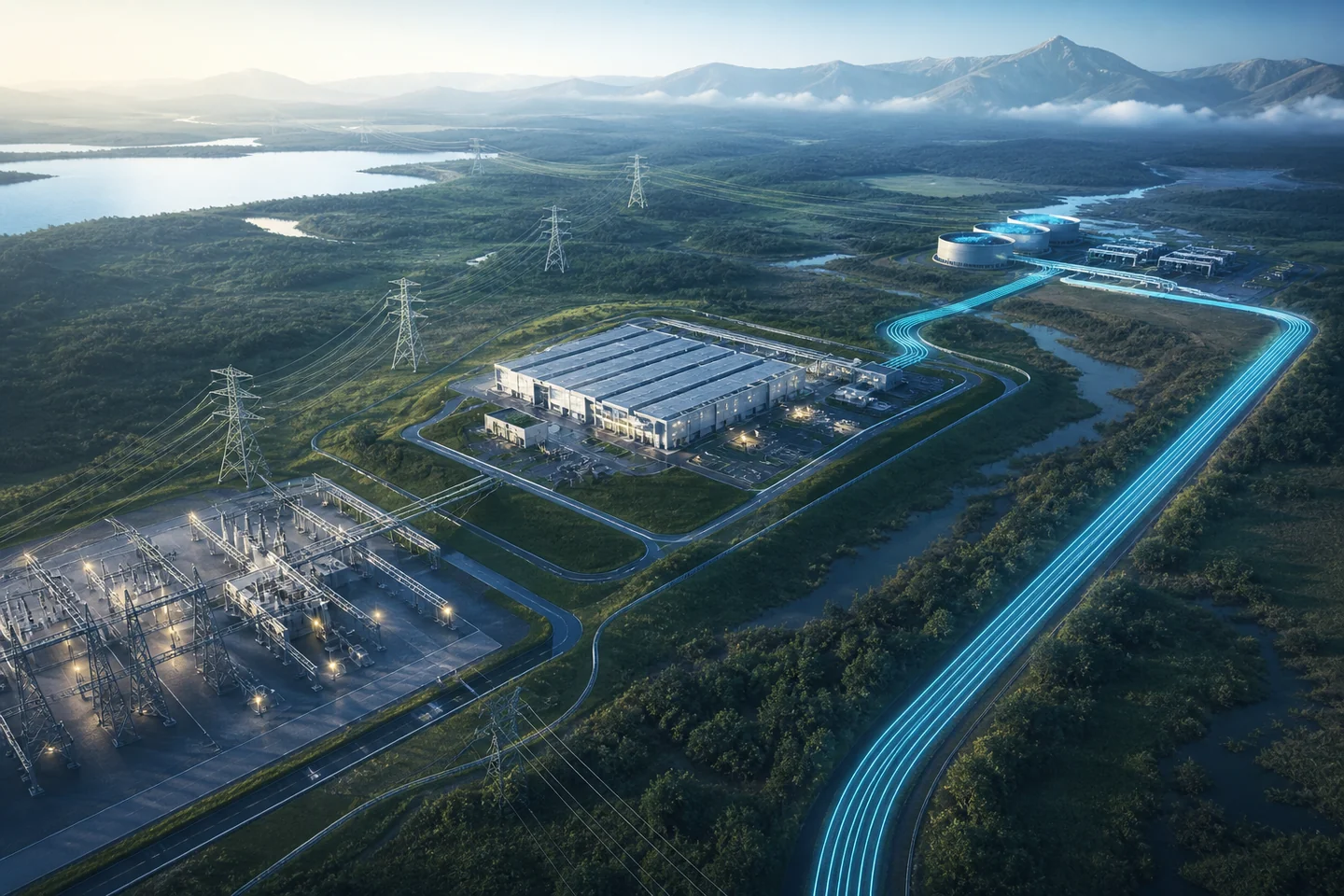
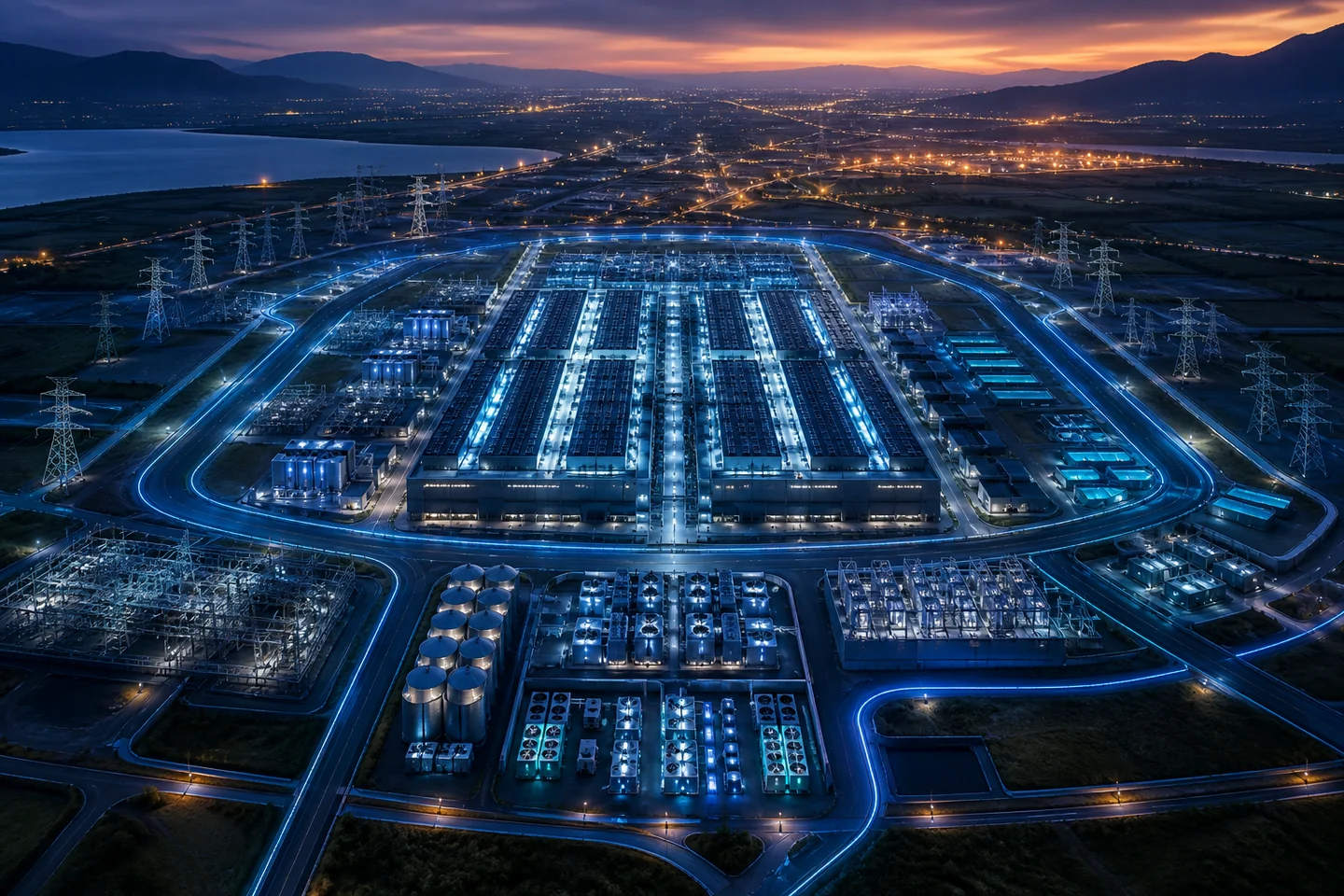
AI infrastructure compresses several constraints into one location: high-density compute, cooling, network access and a reliable electricity supply. The result is a new form of site selection where megawatts and connection timelines can matter as much as land or tax incentives.
Efficiency moves beyond the building
Operators are looking at the full system: chip utilization, thermal design, local generation, storage and the ability to shift flexible workloads. Competitive advantage comes from coordinating those layers rather than optimizing each one independently.
A new corporate capability
Infrastructure planning is moving closer to product and model strategy. Companies that treat energy as a long-term technology input can make better decisions about geography, architecture and the true cost of AI services.
The moat is execution across a queue
Owning land or announcing a power agreement does not create usable compute. Advantage comes from sequencing interconnection studies, substations, transformers, generation contracts, cooling, network routes, construction and hardware delivery so capacity becomes available when the product needs it. A delay in one layer can strand capital in the others.
Companies should maintain a capacity ledger by site and date: firm megawatts, conditional megawatts, dependency, confidence and workload that could move elsewhere. The ledger exposes how much growth depends on one utility, region or equipment supplier and where a second path has enough option value to fund.
- Firm power by commissioning phase
- Connection and equipment dependencies
- Workload placement alternatives
- Cost and carbon exposure by scenario
Efficiency can increase strategic headroom
Efficiency is more than a sustainability metric when power is capped. Better accelerators, utilization, model architecture, cooling and scheduling can turn the same connection into more useful inference or training. Teams should measure useful work per constrained resource rather than optimizing facility overhead alone.
That metric connects product and infrastructure decisions: a lower-cost model, shorter context or scheduled batch can defer a physical expansion. The strongest operators treat compute demand as designable instead of accepting every forecast as fixed load.
Evidence ledger
Infrastructure analysis based on IEA energy-system reporting and operator disclosures. Energy forecasts are scenarios; specific capacity, emissions and water claims require site-level evidence.
IEA analysis expects electricity serving data centres to grow substantially through 2030, increasing the importance of grid and generation delivery.
Operator disclosures describe facility footprints and efficiency programs but should be verified at the site and reporting-boundary level.