Key takeaways
- A useful humanoid needs repeatability across a valuable task, not just mobility.
- Integration and supervision can outweigh the hardware price in early deployments.
- Warehouses and controlled industrial environments remain the clearest proving grounds.
The demo-to-deployment gap
Public demonstrations optimize for visible capability. Operations optimize for uptime, predictable cycle time and safe recovery when a task fails. A robot can look sophisticated and still create negative value if a person must constantly reset it.
The metrics that matter
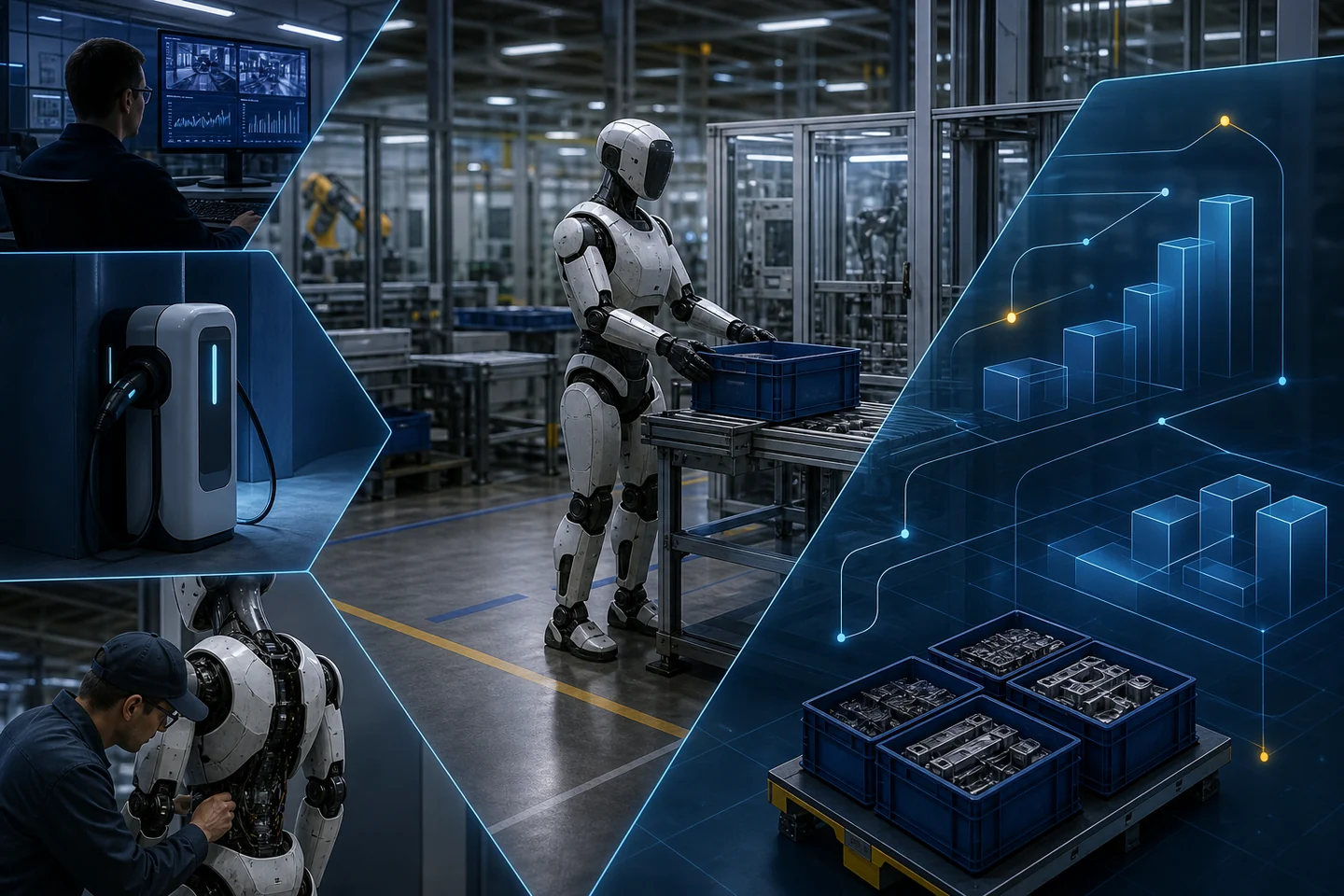
Buyers should evaluate task success rate, mean time between interventions, integration effort and cost per completed unit. These measures expose whether general-purpose hardware creates flexibility or simply moves complexity into software and supervision.
Where adoption can compound
The strongest early environments combine repetitive tasks with human-designed spaces and enough volume to improve the system over time. Each deployment can then create operational data that lowers the cost of the next one.
Use cost per accepted task as the denominator
Purchase price or hourly rental is only useful when divided by successful work. The denominator should exclude failed picks, rejected quality, time awaiting assistance and periods when the robot is technically running but not producing accepted output. This makes utilization, autonomy and process fit visible in one measure.
The model includes hardware depreciation, integration, safety, end effectors, software, energy, maintenance, spares, supervision and the labor required to recover exceptions. A humanoid form may reduce facility modification for some tasks, but any benefit must be compared with the reliability of a simpler fixed robot or redesigned process.
- Accepted units or tasks per shift
- Mean time between human interventions
- Recovery time and skill required
- Complete cost of the alternative process
Demand a task evidence packet
A credible pilot reports the task definition, environment, duration, speed, payload, quality threshold, intervention policy and all excluded cases. Short edited video cannot establish repeatability or safety. Buyers should observe enough continuous operation to see fatigue, calibration drift, unusual objects and recovery from ordinary failures.
The scale decision should also consider fleet support: remote operations, software deployment, spare parts, cybersecurity and the number of skilled technicians per installed unit. Economics that work for one closely supervised demonstration may reverse across a distributed fleet.
Evidence ledger
Deployment-economics analysis informed by robotics standards and sector data. Demonstrations and manufacturer specifications are treated as claims until repeatable task evidence is available in the target environment.
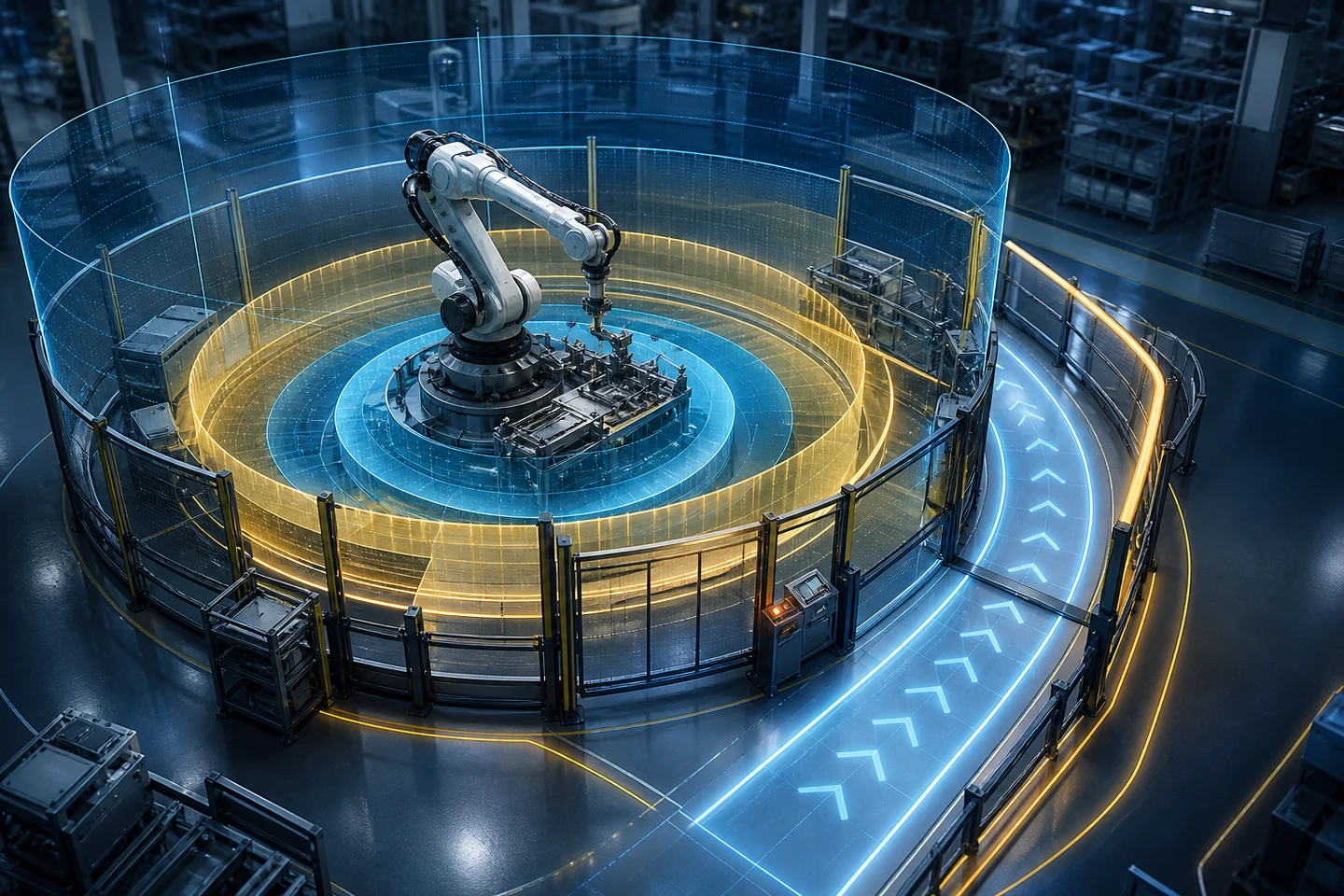
Robot application safety must be evaluated for the integrated task and cell, not inferred from the robot platform alone.
Manufacturer pages can establish stated platform capabilities but not independent evidence of deployment economics.